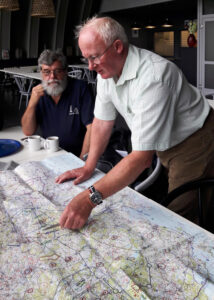
Sherwood Foresters on the Somme 1916

A few weeks ago I was asked to guide a group of family and friends from Nottingham to the Somme Battlefield. One of their ancestors was killed on 1st July 1916, the First Day of the Somme. He was a member of the 1/7th battalion, territorials and fell in the doomed diversionary attack on Gommecourt north of the main attack.
We could visit the site of the battle and find his name on the Thiepval Memorial to the Missing. The group had visited the Somme before. So I thought about an itinerary that would visit other places where the Sherwood Foresters (Notts and Derby Regiment) fought on the Somme.

Here is a summary of the Battalions of the Sherwood Foresters who fought on the Somme in 1916

Battalions Recruitment Formation Comments
1st Regular 24th Brigade, 8th Division In India in 1914
2nd Regular 71st Brigade, 6th Division In Sheffield in 1914
3rd  4th 13th & 14th Reserve and training In UK
1/5th Territorial Force (TF) 139th Brigade, 46th (North Midland) Division Drill Hall, Derby
1/6th TF 139th Brigade, 46th (North Midland) Division Chesterfield
1/7th (Robin Hood) TF 139th Brigade, 46th (North Midland) Division Nottingham
1/8th TF 139th Brigade, 46th (North Midland) Division Newark
9th (Service) K1 (Aug 14) 33rd Brigade, 11th (Northern) Division Formed Derby
10th (Service) K2 (Sap 14) 51st Brigade; 17th (Northern) Division Formed Derby
11th (Service) K3 (Sep 14) 70th Brigade in 8th then 23rd Division Formed Derby
12th (Service) Battalion (Pioneers K3 (Sep 14 24th Division Formed Derby
15th (Service) Battalion (Nottingham) Feb 15 by mayor and committee 105th Brigade in 35th Division Formed Nottingham as “bantams” below 5ft 2ins
16th (Service) Battalion (Chatsworth Rifles) Jun 15 by Duke of Devonshire  & Derbyshire TF Association 117th Brigade in 39th Division Formed Derrby
17th (Service) Battalion (Welbeck Rangers) Jun 15 by mayor and the committee 117th Brigade in 39th Division Formed Nottingham

The 3rd, 4th, 7th,8th, 13th and 14th battalions were reserve or depot units while the 20th was a Labour battalion.

Chris McCarthy’s  Somme Day by Day lists sixteen actions where battalions of the Sherwood Foresters   are mentioned in the text.  Some of these are part of the Big Battle Days of the Somme, such as the first day, Flers Courcelette on 15th September,  Thiepval Ridge 26 September and the battle of the Ancre 13 Novembe. Others seem to have been more local operations.

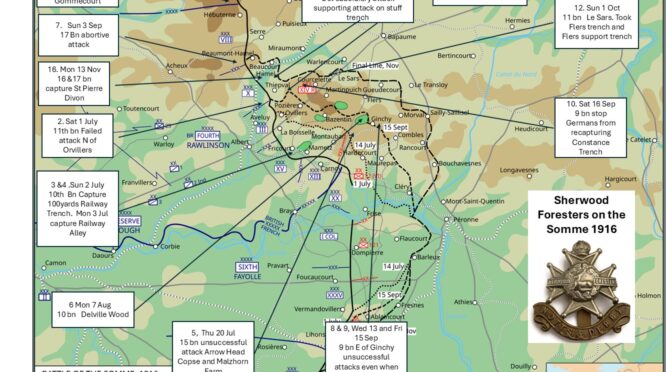
The map shows the location of these actions.

Date/weather  Location Unit Summary Result Casualties
1. Sat 1 July

72o F clear sky

Gommecourt 1/5,1/6,1/7 &1/8 Bns Disastrous diversionary attack Failure 236 dead for both actions
2. 1 July Orvillers 11th Bn Failed attack N of Orvillers Failure
3. Sun 2 July

75o F clear sky

Fricourt 10th  Bn Capture 100yards Railway Trench Success No dead 2 July CWGC
4. Mon 3 July

68o F fine with some cloud and thunderstorms

Fricourt- Capture of Railway Alley 10 Bn “Bombers” of 10 bn involved Success 7 dead 4-5 July CWGC
5. Thu 20 Jul

75o F fine morning, clear sky

Arrow Head Copse and Malzhorn Farm 15 Bn At 5 am after a 30-minute bombardment one company attacked each location , suffering heavy casualties from MG and shellfire.  Those parties that reached the trenches were shelled out Failure 17 dead CWGC
6. Mon 7 Aug

73o F

Delville Wood 10 bn At 4.30 pm 51 bde attacked to establish posts beyond Delville Wood. At midnight 10 bn do so Success 8 dead CWGC
7. Sun 3 Sep

72o F 4mm rain

 Ancre Operations Mary Redan 17 Bn At 05.10 under intense barrage 116 and 117 bdes attacked on right & left, 116 captured front line trenches. 17 bn on left held up by MG fire. Failure 61 dead CWGC
8. Wed 13 Sep

72o F overcast

Quadrilateral E of Ginchy 2 bn At 6 pm 2nd Bn and 9 Suffolks failed attack on Quadrilateral from SW. 521 casualties for two bns Failure 7 dead CWGC
9. Fri 15 Sep

59o F

Quadrilateral E of Ginchy 2 Bn Attack supported by a tank. 2 bn in second wave at 08.20 held up by uncut wire and MG fire. Survivors take shelter in shell holes. Failure 38 dead over three days 15-17 Sep CWGC
10. Sat 16 Sep

66o F fine and sunny

SW Mouquet Farm 9 bn 9 bn stop Germans from recapturing Constance Trench Success 2 dead CWGC
11. Tue 26 Sep

75o F fine day

Between Thiepval and Mouquet Farm 9 bn As part of 33 Bde, capture Joseph,(12.45) Schwaben, Zollern(13.30) and all but 250m of the R side of Hessian Trench. (16.00) Success 36 dead CWGC
12. Sun 1 Oct

65o F sunny day

Transloy Ridge  SE Le Sars 11 bn Formed up in no man’s land and took Flers trench and Flers support trench Success 9 dead GWGC
13. Sun 8 Oct

64o F rain but clearing to a fine day

Schwaben Redoubt 16 & 17bns German night attack on Schwaben redoubt with flamethrowers repulsed by 16 & 17 bns who have just taken over position. Success 28 dead CWGC
14. Mon 9 Oct

64o F fine

Schwaben Redoubt 16 bn At 0430 16 bn surprise attack in the dark on N face of  Schwaben Redoubt. Right coy entered trench but forced out. Failure 6 dead 16 &17 bn CWGC
15. Sat 21 Oct

45o F fine but very cold

“Pope’s nose” 17 bn Subsidiary attack on “Pope’s nose “gained some ground” in support of attack on Stuff Trench Success No dead on CWGC
16. Mon 13 Nov

54o F

Ancre Valley 16 & 17 bns At 0615 16 bn attacked with two coys to clear dugouts in river banks and one coy along the top of the river bank. Germans taken by surprise. St Pierre Divon taken by mix of 16 bn, and other units. 16 bn rescue a bogged in tank under attack by Germans.  721 soldiers &13 Officers PW Success One dead  CWGC

CO reports

One officer KIA

4 ORs KIA

15 Missing

49 Wounded

The map shows the location of these actions.

The CWGC database lists 1000 men of the Sherwood Foresters who died between 1st June and 1st December 1916.  (The web page says there are over 2000 results, but the download lists 1000 names)

Listening Post No 6: Julian Humphrys – Interpreting England’s Heritage

After reading History at Emmanuel College, Cambridge and completing a postgraduate course at the Polytechnic of North London, Julian spent 12 years at Chelsea’s National Army Museum, setting up special exhibitions including its acclaimed Road to Waterloo Gallery, liaising with the British Army and acting as spokesman to the media on all matters of military history. He has acted as a historical expert on many TV and radio programmes,  and made three expeditions to Bosnia during the Civil War to record the British Army’s activities there and to obtain objects for display in the Museum.

A qualified blue-badge guide, Julian set up English Heritage’s Tours Through Time programme of guided visits to historic properties and its battlefield hikes programme which he now leads. he also guides on a wide range of tours for special interest travel companies, both in the UK and overseas.

From 2009-2020 he was Development Officer of the Battlefields Trust, the UK Charity dedicated to the preservation and interpretation of Britain’s historic battlefields and is now a Trustee. Julian lectures and writes on many aspects of British history – he is a contributor to BBC History Magazine and History Revealed Magazine and his published books include   Clash of Arms: Twelve English Battles, and Enemies at the Gate: English Castles under Siege (both for English Heritage).

Click here to download the Podcast

Listening Post No 5 Tonie and Valmai Holt – the couple who opened the doors to the battlefields

Tonie and Valmai set up the first modern commercial battlefield touring company in  the 1970s, when there was little tourist infrastructure or any previous model to follow.  They blazed the trail for guiding battlefields and sold their business in the 1990s to concentrate on their books.  They have been part of the virtuous circle that encouraged  the development of commemoration and tourist facilities in local communities on historic battlefields.  

Tonie and Valmai Holt started guiding when visitors included many veterans of the two world wars.  For some years they were responsible for organising and conducting Pilgrimages for the Royal British Legion.  They are honorary members of the Guild of Battlefield Guides International 

The podcast is divided into three parts.

Part One –  covers Tonie and Valmai’s background, how they came to set up Major and Mrs Holts Battlefield Tours, the challenges they faced setting up a battlefield touring company and some of the difficult problems they had to solve.

Part Two – The Holts tell some about some of the veterans they met, and share their stories,  some of their most emotionally moving experiences on historic battlefields and introduce a song about D Day that they would like to be passed on as widely as possible.

Part Three –  Tonie and Valmai talk about some of their most amusing experiences,  guiding in the last century and their advice for battlefield guides.

Listening Post No 4 Chris Scott – the Lord General of Validation

Dr. Christopher Scott has been walking battlefields for over 45 years and has been to 332 fields in 20 countries over 5 continents. He has guided sites of Medieval, Civil War, Marlburian and Napoleonic battles and was a Trustee of the Battlefield Trust and The Guild of Battlefield Guides, which he also helped create and designed their first Validation Programme. He formulated his own approach to battlefield study and has written several military history and battle books including a new and detailed interpretation of Roundway Down. Whilst in Education he led departments and faculty teams,  He and helped found a Further Education College. At The Royal Armouries he designed the education and public interaction programmes for the Leeds Museum. Chris is a freelance guide, lecturer, consultant and writer; he is also a good storyteller and a past winner of the Cameron Mackintosh Contemporary Playwright Award. He was the Lord General of the Roundhead Association.

Listen to the podcast

Listening Post No 3 Graeme Cooper – Founding Force for the Guild of Battlefield Guides

Graeme Cooper has been battlefield guiding since 1995 and operates Cooper’s Waterloo Tours, a family run business specialising in tailored tours to Napoleonic battlefields for adults, and leadership training for the military.

A Fellow of the International Napoleonic Society (FINS), Graeme qualified as a Waterloo Campaign Guide with Les Guides 1815 in 1998.

In November 2003, Graeme inspired the foundation of The International Guild of Battlefield Guides and was the Secretary up until November 2009 when he became the first member of the Guild to be elected to the Roll of Honour for his services to the Guild.

Graeme is married with a son and daughter and lives in Essex. He plays golf when battle time permits.

Listen to the podcast here

Listening Post No 2 Sue King – the Camp Follower who Leads Guides

Sue King is a professional guide, and guide trainer. Besides her accreditation by the International Guild of Battlefield Guides  she is a very experienced Blue Badge guide  qualified to guide Yorkshire, London, Cumbria, South West, Liverpool City Region / Merseyside, South East England, Heart of England.  She is also a City of London Guide. For several years she has been the director of training for the London Tour Guides.

Listen to the podcast

The Listening Post is a Podcast about Battlefield Guiding. There have been battlefield guides throughout history, but the modern trade started in the second half of the C20th. In 2003 the International Guild of Battlefield Guides was founded a professional organisation to analyse, develop and raise the understanding, practice and profession of battlefield guiding and to promote the education of battlefield visitors and students in military heritage.
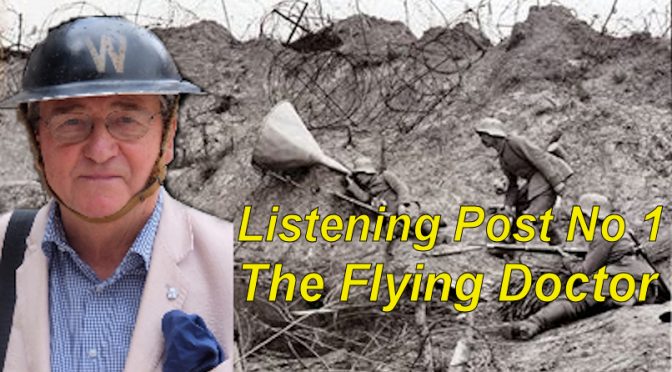
The Listening Post 1. John Richardson: The Flying Doctor

The Listening Post is a Podcast about Battlefield Guiding. There have been battlefield guides throughout history, but the modern trade started in the second half of the C20th. In 2003 the International Guild of Battlefield Guides was founded a professional organisation to analyse, develop and raise the understanding, practice and profession of battlefield guiding and to promote the education of battlefield visitors and students in military heritage.

John Richardson’s full credentials are Professor & Colonel (Retired) J.C. Richardson, MA, MB BChir, MRCS LRCP, MSc(GP), MMedSc(Occ Hlth), FRCGP, FFOM(RCPI), DRCOG  Emeritus Defence Professor of Primary Care & General Practice.  He has been leading and taking part in expeditions for nearly sixty years. During that time his expeditions have faced most of the four horsemen of the apocalypse.

Listen to the podcast

John was known as Doctor John to Royal British Legion staff as he organised medical support to the Legion’s pilgrimages to war graves, memorials and battlefields across the world.  Each Pilgrimage was supported by a doctor nurse or paramedic recruited by John. He briefed Pilgrimage tour escorts,  manager/guides about the medical problems and support for tours. A is  copy is here for your interest and education.

Book Review Commando John Durnford Slater

Greenhill books have published a revised edition of Durnford Slater’s 1953 memoir Commando: Memoirs of a Fighting Commando in World War Two.  This edition includes a new foreword by Neil Barber.

In June 1940 Captain John Durnford Slater RA was adjutant of a training regiment. His CO wrote such a supportive letter that Durnford Slater was appointed commanding officer of the first Army Commando to be formed – No 3 Commando. His memoir covers the formation, training and actions of No 3 Commando, from Guernsey in 1940 through the Lofoten Islands, Vaagso, Dieppe and Sicily, and of his commando brigade in Italy. He tells his story of his own experiences as a D Day planner and deputy commander of the divisional sized commando force in North West Europe.

Commando is the first-hand account by one of the men who created the commando concept and led them in battle. Commandos have copied by armies and navies world-wide as commandos or rangers, the US knock off.  It is also a study in leadership and command by a great fighting commander. It also includes delightful elements of what can be described as unofficial history – those stories that get left out of more guardedly written works, because of the reputational risk. Durford Slater’s men played hard and there are some escapades that would hit the front pages of the tabloids . Durnford Slater’s willingness to share these tales with his readers may also account for why he retired as a substantive major.

Appointed on 28th June 1940  Durnford Slater was given a fortnight to recruit and form No 3 Commando. After pillaging Southern Command for officers, these were sent to recruit volunteers for their own troops.  By 5th July his unit was in existence with thirty-five officers and five hundred men. Their first operation took place ten days later.  He and his officers seem to have been left alone to develop raiding techniques and a training regime that has been copied world-wide. It is hard to see how a comparable capability could be developed without a multi-million consultancy engagement. In 1940 a buckshee captain went off with the authority of the Deputy CIGS. The British Army seems have been ambivalent about Commandos, allowing the Royal Marines to own the concept. Durnford Slater’s work provides some explanations about why they may have been resented.

This work has much to offer anyone studying leadership and command. Durnford Slater sought intelligence, initiative and a sense of humour in his officers, perhaps recognising that sense of humour is the seventh core value of the Army. Every officer joined his unit as a subaltern, and every soldier as a private. He turned down Simon Fraser, Lord Lovat who would not relinquish his captain’s rank.  His approach to paperwork and discipline will strike a chord with many readers.

One glorious aspect of the memoir are the tales from the margins of military history, The punch-ups with Irish navvies and Royal Marines, the plot to blow up the German embassy in Dublin, booze ups in enemy territory, and the staged visits for VIPs to patrol no man’s land in Normandy against a controlled enemy. It turns over a corner of the rug under which much history is swept.

I can’t remember reading Commando before. Its one I wish I had read much earlier.

The book has 211 pages, and thirty-six black and white photographs. There are seven clear sketch maps to illustrate Commando operations.

The 2020 edition has a RRP of £13.99, though you will not need to pay that to obtain it online, and the 1953 edition can be obtained for around £3.00

Book Review The Secret Capture: U-110 and the Enigma Story, Author Stephen Roskill

This is a well written account of the capture of  the German submarine  U-110 on May 1941. This was possibly one of the most important naval actions of the battle of the Atlantic, with far reaching results. Although U-110 sank on tow, its precious Enigma machine had been extracted and its secrets helped to inform British naval intelligence of German U Boat movements and route convoys to avoid them.

The book was originally written in 1959, to rebut the claims of Rear-Admiral Daniel V. Gallery USN that his capture of U -505 in June 1944 was unique. In the official history “The War At Sea.” Roskill had downplayed the capture of U Boats.  U110 merited only a single line with the statement that it had been sunk. The first third of the The Secret Capture tells the story of the other submarine captures of the Second World War.  The rest of the book is a fine account of convoy OB318, its encounters with U Boats and the capture of U110 by the 3rd Escort Group under Captain Addison Joe Baker-Creswell, to whom the book is dedicated. There could be no mention of Enigma, but there are references to books, codes and enough “secret material” to fill two crates.

It is a very readable account which covers the human story of the war at sea from the point of view of officers and men from the Royal Navy and merchant marine. Roskill went to some length to track down ex sailors and merchant seamen ten years after the events.  He is a good writer and spins a good dit.

The book has 167 pages, and sixteen black and white photographs. There are six charts and two diagrams to explain the movements and convoy formations.  These are clear and helpful.

This edition includes a new foreword by Baker-Crewsell’s son Charles, with more biographical information.   Professor Barry Gough has written a short new introduction that explains the context and importance of the recovery of the Enigma machine.

There are two reservations about the work.  The book doesn’t quite do what it says on the cover. I would have expected to have read more about the exploitation of the Enigma machine. The 2011 edition seems overpriced with at RRP of £16.99, though you will not need to pay that to obtain it online, and the 1959 edition can be obtained for £0.80

This is a good historic tale, told well.

LRE Expo 2020 – A post BREXIT Challenge


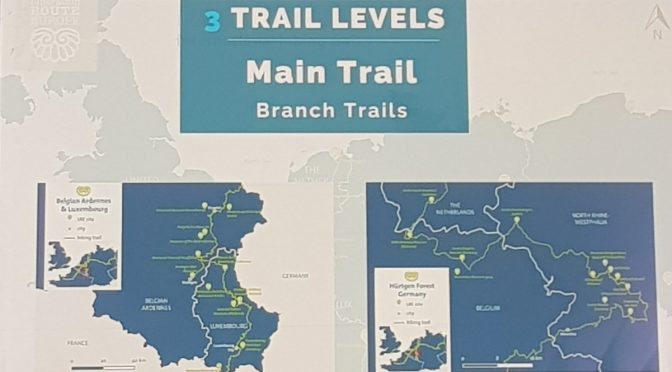
At the beginning of February I attended an event in Brussels that really impressed me. Liberation Route Europe is an ambitious project, a marketing initiative to promote remembrance tourism of the Second World War across the continent of Europe. It was started by a Dutch charity, but now encompasses Europe from Sicily to the UK and Normandy to Poland. I met a great bunch of people.  There are several impressive achievements.

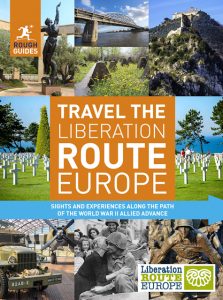
• A walking trail covering Liberation Routes from London to Berlin via Normandy.• An impressive Rough Guide “Liberation Routes”, with a mixture of history, a campaign guide information about museums, memorials and cemeteries.

• A network of guides, museums and tourism organisations to support inbound travel.

• Generating business with inbound tour operators using the Liberation Route.

• Political support and engagement by senior European politicians. Liberation Route Europe’s Patron is Martin Schultz, a past President of the European Parliament and previous key-note speakers include Frans Timmermans, the Vice President of the EU Commission.

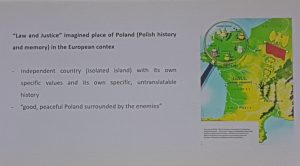
No punches pulled in a critique of Poland’s current ruling party view of history

• A willingness to debate contentious contemporary issues. The event included several presentations of gaps or critical interpretations, including the Dutch neglect of its post war experience in Indonesia, and the current day Russian and Polish government driven historic narratives. There was a debate between two MEPs about the extent to which the EU should have an authorised narrative. A little incongruous, inconclusive and less than exciting, but significant that it took place.
Their website has a mixture of history and tourism offers. History takes the visitor to story lines, based on historic themes, geographic locations and personal stories. An invitation to Travel the route offers directs visitors to offers for individual, groups, educational tours, guides – and the Rough Guide.

Way marker design for the walking trails

The history behind the Liberation Route is based on an agreed historic interpretation named as the “Magna Carta”. This interpretation, agreed by eight historians of different nationalities, draws on the full range of individual experiences of the populations of European states during the Second World War. This acknowledges that loyalties were divided and avoids judgements on the actions of a generation that is fading from personal memory. The liberal politicians supporting the project see the story of the Second World War, and its roots in fascism and racial supremacy as an important warning from history. The inclusive interpretation focusing on the common experiences of European populations is an ideological counter to the nationalism and intolerance of modern populism.

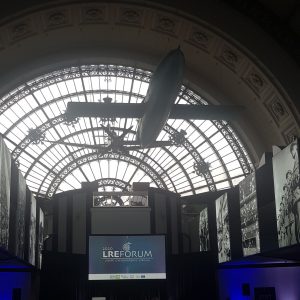
The conference took place in the Royal Museum of the Armed Forces and Military History in Brussels under a Spitfire on the tail of a V1 flying bomb. Brussels and Antwerp, like London faced intense bombardment in 1944-45. There is no museum in London that tells the story of London’s defence against the V1 blitz. In Belgium they are opening museums and interpretation centres to tell the story of their heritage. In Britain we are closing military museums.

Liberation Route Europe has been keen to engage with Britain. The Liberation Route walk starts in London. Whatever the UK’s future relationship with Europe, it does not affect its role in the Second World War and there is a common interest in promoting heritage to inbound tourists. However, many Britons are skeptical of “Euro History”. Some question how Germans can tell the story of WW2. Nor does the Liberation Route Europe focus on the heritage of 1944-1990 fit the British narrative with its finest hour in 1940.
Recent research segments tourists by their interests, referred to as passion communities, rather than by demographics. One segment is described as explorers of cultural identify. Around one third of visitors plan to visit sites associated with the world wars. This roughly reflects the segment covered by dark tourism research and the research commissioned by the Royal British Legion. Liberation Route Europe is ahead of the game as a focus for organising inbound tourism for this sector. Britain, committed to existence outside the EU needs to up its game.

Military history, Battlefield heritage and Touring